

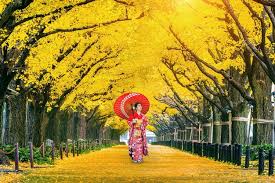
When people hear the phrase “Yellow Spring Road Japan”, it often sparks curiosity, confusion, or even a sense of mystery. At first glance, it may sound like the name of a picturesque tourist destination—perhaps a golden road lined with cherry blossoms or a rural path through glowing rice fields in spring. However, the true meaning of this phrase is much deeper, rooted in Japanese culture, mythology, and symbolic language.
This blog post will explore the origins, cultural significance, and interpretations of Yellow Spring Road in Japan, breaking down its linguistic meaning, historical background, and modern-day relevance. By the end, you will see how this phrase reflects one of Japan’s most fascinating connections between language, spirituality, and the afterlife.
The Meaning of “Yellow Spring”
To understand Yellow Spring Road Japan, we must first look at the meaning of the term “Yellow Spring” itself.
In Japanese, the phrase 黄泉 (Yomi) is used.
- 黄 (ki or kō) means “yellow.”
- 泉 (izumi or sen) means “spring” (as in a fountain, source of water, or underground spring).
So together, 黄泉 (Yomi) literally translates to “Yellow Springs.”
In Japanese mythology and literature, Yomi is the land of the dead—a realm where souls go after death. It is not a place of fiery torment like the Christian concept of Hell, nor is it a blissful paradise. Instead, Yomi is often described as a shadowy, somber, and somewhat decayed place.
The term likely originated from Chinese mythology, where Huangquan (黄泉) also refers to the underworld, symbolizing the spring or well beneath the earth where souls travel after death.
Yellow Spring Road – The Path to the Afterlife
Now that we understand Yellow Springs (Yomi) refers to the land of the dead, Yellow Spring Road (黄泉路 / Yomiji) refers to the road leading to that land.
- 黄泉路 (Yomiji or Yomino-michi) translates to “The Road to the Yellow Springs.”
- In English, it is often rendered as “Yellow Spring Road” or “The Road to the Afterlife.”
In Japanese culture, this phrase is a poetic metaphor for death. To say someone has “taken the Yellow Spring Road” means they have passed away.
Much like Western idioms such as “kicked the bucket” or “crossed the River Styx”, Yellow Spring Road is a cultural euphemism—a symbolic way of speaking about the inevitability of death without directly using harsh terms.
Origins in Japanese Mythology
The concept of Yellow Spring Road has its roots in ancient Japanese texts, particularly the Kojiki (Records of Ancient Matters, compiled in 712 CE) and the Nihon Shoki (Chronicles of Japan, 720 CE).
One of the most famous stories tied to Yomi is the myth of Izanagi and Izanami, the divine couple who created the islands of Japan.
The Myth of Izanami in Yomi
- Izanami, the goddess of creation, died giving birth to the fire deity Kagutsuchi.
- Grief-stricken, her husband Izanagi traveled to Yomi, the land of the dead, to bring her back.
- Upon reaching her, he found Izanami’s body decayed and crawling with maggots. Horrified, he fled.
- As he escaped, Izanami chased him, furious at being seen in such a state.
- Izanagi eventually sealed the entrance to Yomi with a massive boulder, forever separating the worlds of the living and the dead.
This myth shows that Yomi is not a place of beauty, but a somber and irreversible destination. The road to Yomi (Yellow Spring Road) symbolizes the one-way journey into death.
Yellow Spring Road in Japanese Literature and Poetry
The idea of Yellow Spring Road appears frequently in Japanese classical literature and poetry as a metaphor for death. It has been referenced in:
- Waka and Haiku Poetry – Poets used “Yellow Spring Road” as a beautiful yet sorrowful expression of life’s impermanence. For example, when lamenting the loss of a loved one, a poet might write of them “walking the Yellow Spring Road.”
- Noh and Kabuki Theater – Traditional Japanese plays sometimes describe the transition between life and death using imagery of roads, rivers, and thresholds.
- Buddhist Texts – Since Buddhism emphasizes the cycle of death and rebirth, the phrase “Yellow Spring Road” is occasionally used to describe the departure from this life toward the next.
This cultural depth ensures that the phrase resonates beyond mythology—it becomes part of everyday expressions of grief, remembrance, and the acceptance of mortality.
Yellow Spring Road and Symbolism in Japanese Culture
The symbolic meaning of Yellow Spring Road is tied closely to several cultural themes:
1. Impermanence of Life (無常, mujō)
Japanese culture emphasizes the fleeting nature of existence. From cherry blossoms that bloom briefly in spring to the concept of mono no aware (the gentle sadness of things passing), the idea of walking the Yellow Spring Road fits perfectly within this worldview.
2. Journey Metaphor
Life is often viewed as a journey in Japanese philosophy. Death, then, is simply the next stage—the road beyond this world. The phrase captures this transition without finality, as though life continues elsewhere.
3. Respectful Euphemism
Rather than speaking bluntly of death, using poetic expressions like “taking the Yellow Spring Road” shows reverence and sensitivity. Much like in English we say someone has “passed away,” this Japanese phrase softens the harshness of the subject.
Modern Usage of “Yellow Spring Road”
Even today, the phrase Yellow Spring Road is still used in Japan, though primarily in literature, memorial speeches, and poetic writing rather than in daily conversation.
For example:
- Obituaries or Memorials: Writers may say someone “has gone down the Yellow Spring Road” as a way of honoring their passing.
- Films, Anime, and Novels: Some modern Japanese works still reference Yomi or the road to Yomi, connecting contemporary storytelling to ancient mythology.
- Spiritual Practices: Certain Shinto and Buddhist rituals symbolically acknowledge the path of the soul toward Yomi or the afterlife.
Interestingly, some video games and manga, inspired by Japanese mythology, depict the road to Yomi as a literal path or journey that characters must take, often full of trials or spirits.
Comparisons to Other Cultures
The concept of Yellow Spring Road in Japan is not unique. Many cultures use metaphors of roads, rivers, or paths to symbolize death:
- Ancient Greece: Souls crossed the River Styx to enter Hades.
- Norse Mythology: The dead traveled the road to Helheim, the land of the dead.
- Christianity: Death is often called a “journey home” or “crossing over.”
- Chinese Mythology: Huangquan (Yellow Springs) is nearly identical in meaning to Japan’s Yomi.
These parallels show that humanity universally conceives of death as a journey along a road or river leading to another world.
Yellow Spring Road as a Reflection of Japanese Worldview
Ultimately, the phrase Yellow Spring Road Japan reflects the cultural attitudes toward life and death in Japanese society. Rather than portraying death as purely tragic or terrifying, it frames it as a path everyone must eventually take.
It emphasizes:
- Acceptance of mortality rather than denial.
- Respect for the dead through poetic language.
- Continuity of existence rather than abrupt ending.
In this way, “Yellow Spring Road” serves as both a cultural symbol and a philosophical comfort.
Conclusion
The phrase “Yellow Spring Road Japan” may sound mysterious to outsiders, but its meaning is deeply embedded in Japanese language, history, and belief systems.
- It originates from 黄泉 (Yomi), the mythological land of the dead.
- Yellow Spring Road is the path to Yomi, a metaphor for death.
- It appears in mythology, literature, poetry, and cultural expressions as a poetic way to speak of life’s end.
- Its symbolism reflects the Japanese worldview of impermanence, journey, and reverence for the dead.
Far from being a literal road tourists can visit, Yellow Spring Road is a powerful metaphorical and spiritual concept that continues to echo in Japanese culture today.
